Forgiveness isn't about the other person; it's about you. It's not about excusing their actions. It's about "for-giving" a part of you that has been holding onto resentment, anger, or guilt that no longer serves you.
This article explains what forgiveness truly is, why it's vital to forgive yourself first, and how to process forgiveness for others so you can free yourself from carrying the hurt and pain they caused.
Yeah, why should you forgive? What does it even matter if you forgive? Well, there is forgiving yourself and there is forgiving another. I think it is vital that we forgive ourselves more often than we do. When it comes to forgiving others, that is a bit of an 80/20 rule in my opinion.
Here is how I see forgiving—it is for-giving. I for-give a part of me that I have held on to that is no longer serving me. That used to be me, and so I can let what I did go and learn from the experience.
When it comes to another person, you are letting go of what you are holding onto about them, the space it is holding in you.
Forgiving someone does not say the action they did was okay, no no way. You aren't excusing them from their actions, you are freeing yourself from carrying the hurt and pain they caused.
So why should you actually do this? Because carrying resentment is exhausting.
That anger, that guilt, that hurt—it's taking up space in you. Space that could be used for literally anything else. You can't change what happened, but you can free yourself from it.
I learned this the hard way. Here are two examples, one for forgiving yourself and another for forgiving another.
If you have lived long enough, you know you have done some things in your life where you don't feel good about. I know I have.
As men, we sometimes carry shame and guilt around who we are and how we are showing up in our lives. I sometimes think back and wish I hadn't yelled, made that rude comment, or showed up with my partner the way I did. Whatever the thing is, as men we go through these similar emotions regardless of what the actual story line was or what we did. We all feel shame, guilt, sadness, fear, and anger.
Let me tell you about a time I felt all of those at once.
In the past, when I would speak to my mom, she would say the oddest things out of nowhere and I would get confused about our conversation, or she wouldn't listen and say something from left field. In those moments I would get so angry and yell at her and hang up the phone on her.
I knew I shouldn't have done those things, but I did anyways. After I would hang up, I would judge, berate and feel so guilty for doing it. I would say things like, "What's wrong with you?", "Why would you yell at mom like that?", "You are such an asshole?" On and on.
The guilt would sit in my chest for hours, sometimes days. I'd replay the conversation over and over. Eventually, I'd pick up the phone. Sometimes I'd apologize to her. Sometimes I wouldn't. But either way, I had to do the harder thing—I had to forgive myself.
I'd sit with it. Take a few breaths. And I'd say something like: "You got triggered. You yelled. That's not who you want to be, and that's okay. You can learn from this." Not excusing it. Just letting it go. Trusting that I could do better next time.
I can continue to judge myself, berate myself, or feel guilty for the things I have done in the past or I can take a beat and learn to forgive myself. When I feel ready, I forgive myself, let it go, and move on. Trust that what happened is a learning lesson.
You might say, this is easier said than done. Yeah you might be right. I also think it's just practice. Once you start practicing forgiving yourself and learning from everything you do, this frees you to being a better man. This allows you to show up in more powerful ways for yourself, your friends and your family.
And here's the thing—I still mess up with my mom sometimes. But now when I do, I don't carry it for days. I forgive myself faster. I apologize sooner. The pattern is breaking because I'm not drowning in guilt anymore.
So now that you have gotten a bit on how to forgive yourself, let's see how you can forgive another.
Here is one of my stories of forgiveness.In 2014, my uncle reached out to me and said that he wanted me to come into his office so he can talk about finances and seeing how he can hand over more responsibilities to me. I was really excited for this, as I really wanted to take more on.
When I got there, the conversation had nothing to do with giving me more responsibilities, but about how I am not living my life well and I need to seek help. I was shocked and confused. My stomach dropped. I felt ambushed. That left a really bad taste in my mouth with him and I became less trusting of him and his intentions.
That small little act that he made took me down a spiral of whether or not I trust him. I got really self-righteous about who I am and I stopped talking to him for 5 years. Yes, I am sad to say. I had a really close relationship with him, seeing him once every few weeks, but after that incident, I no longer felt safe to interact with him. Complete silence for five years.
The sad thing is that I never got to reconcile with him because he passed away. I only got to see him a few weeks before his passing, not able to speak, trying to say my name and seeing tears roll down his eyes. I was there, but we couldn't really talk. I couldn't tell him what I needed to say.
Here is why forgiveness is so important. After he passed away, I felt so much guilt for not giving him a chance. Allowing him to come back into my life. It took me years to work through this, to forgive myself and in the end forgive him for his actions. I wish I was able to let go of this sooner so that I could have had a relationship with him before he passed. A few months after his passing, I went to his gravesite and sat down and asked him for forgiveness. I told him I was sorry. That I loved him. That I wish I hadn't been so stubborn.
I feel that my uncle's actions weren't that big of a deal now that I think about it. He cared about me so he did what he thought might be best. Here is where the 80/20 rule comes into play for me.
I would say most people will do things that are easily forgivable—the 80% side.
Then there are certain things where forgiving someone is really hard—the 20% side.
At the end of the day, if you can forgive yourself so you aren't holding onto things and hurting yourself, you have gotten the winning lottery ticket.
Having challenges with others is natural. We are human beings. We will cross each other if we are truly authentic in how we live. We will challenge each other. We will see each other in ways we did not realize. The important piece is: can you forgive, come to reconciliation, let go, whenever that time may be?
So I'll ask you again: Why the f*&k should you forgive?
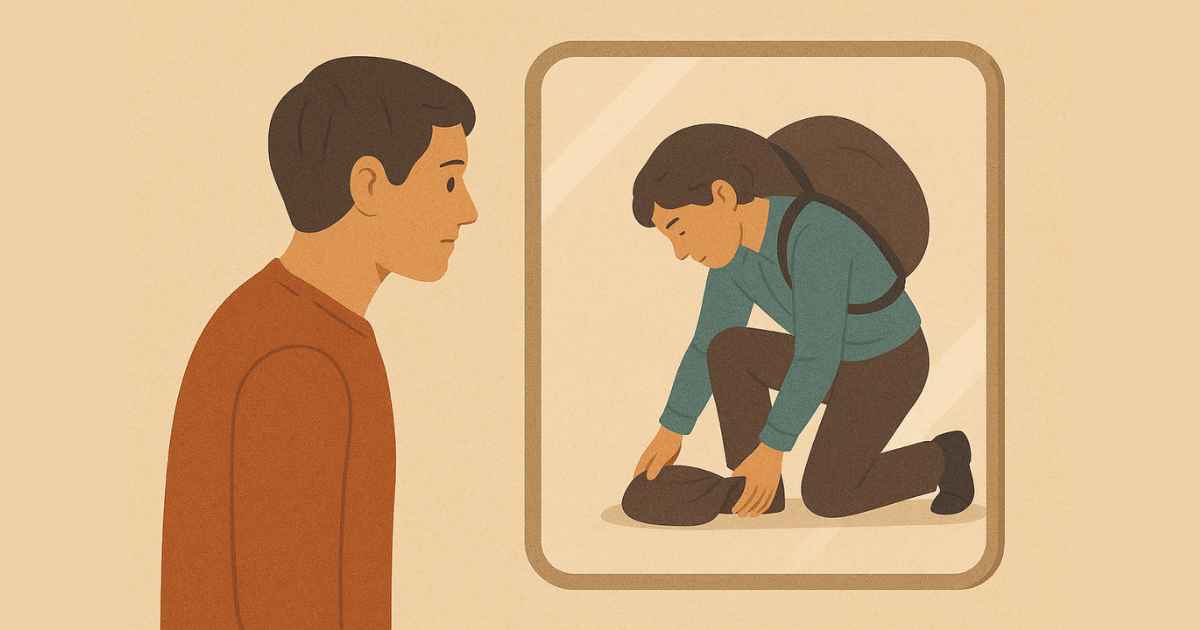
Because I can't get those 5 years back with my uncle. Because I wasted too much energy beating myself up instead of learning and growing. Because holding onto resentment is like carrying a backpack full of stones—and life's too damn short for that.
Who do you need to forgive? Maybe it's someone else. Maybe it's yourself. Either way, that weight you're carrying? You're allowed to put it down.
Q: What if forgiving them feels like I'm saying what they did was okay?A: It doesn't. This is the biggest misconception. Forgiving someone does not say the action they did was okay. You aren't excusing them from their actions; you are freeing yourself from carrying the hurt and pain they caused.
Q: What's the difference between forgiveness and reconciliation?A: Forgiveness is an internal process. It's you, on your own, letting go of the resentment and hurt. Reconciliation is an external process that involves both people rebuilding trust. You can forgive someone (let go of the weight) without ever reconciling or even speaking to them again.
QS: How do I forgive when I still feel angry?A: Don't try to "skip" the anger. The anger is there for a reason. Forgiveness doesn't mean you stop feeling. It means you feel the anger, you acknowledge the hurt, and you make a conscious choice to stop letting that anger define your present. It's a practice, not a light switch.
Ready to practice forgiveness? I created an audio recording to guide you through a forgiveness process. Enjoy.